Comedogenic Cosmetic Ingredients: A Practical Guide to Prevent Clogged Pores

Share
Comedogenic cosmetic ingredients are substances that, in some people, can contribute to clogged pores and the appearance of blackheads, closed comedones, or persistent blemishes. They are not automatically “bad”: their tolerability depends on their concentration, the overall formula, the area of application, and above all, skin type. A rich cream may feel comfortable on dry cheeks but prove too occlusive on an impurity-prone forehead, nose, and chin.
Ingredients to assess carefully in the case of acne-prone or congested skin include very rich oils and butters, such as coconut oil, cocoa butter, wheat germ oil, and certain waxes or emollient esters. Isopropyl myristate, myristyl myristate, ethylhexyl palmitate, and certain lanolin derivatives may also be problematic for particularly reactive skin. However, their presence in the INCI alone is not enough to predict a reaction: their position on the list, the product texture, and frequency of use all matter.
To choose wisely, opt for lightweight, non-occlusive formulas, especially for leave-on products, serums, sunscreens, and foundations. Introduce one product at a time and monitor it for two to three weeks: small, uniform pimples, more visible pores, or recurring comedones in the areas where you apply it are useful signs. In cases of persistent acne, a streamlined routine and advice from a dermatologist can help distinguish true comedogenicity from irritation, folliculitis, or other triggers.
Which comedogenic cosmetic ingredients should you check first on the INCI list?
On the INCI list, the first ingredients to check if your skin is prone to blackheads and blemishes are highly emollient esters, especially Isopropyl Myristate, Isopropyl Palmitate, Myristyl Myristate, Ethylhexyl Palmitate, Octyl Palmitate, and Butyl Stearate. In some rich formulas, they can contribute to a congested skin feeling, particularly on the face, T-zone, and back. Also pay attention to Laureth-4, Acetylated Lanolin, Algae Extract, and certain lanolin derivatives: they are not automatically problematic, but they are worth checking if blemishes appear regularly.
Among oils, Coconut Oil and Wheat Germ Oil are often not ideal for very acne-prone or easily clogged skin, especially when they appear near the top of the ingredient list. This does not mean that every oil should be avoided: squalane, jojoba, and oils formulated in lightweight textures may be well tolerated, but the response depends on the concentration, the cosmetic base, and the overall routine. Waxes, butters, and heavily layered formulas can also be too much when sebum production is high.
However, do not rely on a single “blacklist” of comedogenic cosmetic ingredients. Comedogenicity is not the same for everyone, and a potentially occlusive ingredient may be harmless at low percentages or in a rinse-off product. If you suspect a cosmetic product, stop using it for two or three weeks without changing the rest of your routine, then observe whether microcomedones and under-the-skin pimples decrease. Choose simple, not overly rich formulas, and initially test them on just one area of the face.
How can you tell whether a product is clogging pores or causing blemishes?
A product may contribute to clogged pores when, after 1–3 weeks of consistent use, small closed comedones, blackheads, or an uneven skin texture appear, especially in the areas where it is applied: the forehead, chin, sides of the nose, cheeks, or hairline. The most typical sign is not the occasional single pimple, but a gradual increase in uniform micro-blemishes. Very rich formulas, heavy oils, waxes, butters, or certain esters may be unsuitable for congestion-prone skin, but the response is always individual: a list of comedogenic cosmetic ingredients is a useful reference, not a definitive diagnosis.
To determine whether the product is responsible, temporarily simplify your routine for about two weeks: a gentle cleanser, a basic moisturizer, and sunscreen. Stop using only one new product at a time, especially foundation, primer, facial oils, highly occlusive balms, and hair products that come into contact with the skin. If congestion improves, reintroduce it gradually, applying it every other day and monitoring for new blemishes in the same area. Avoid testing several new products at once, as this makes it impossible to identify the trigger.
Distinguish clogging from irritation: burning, itching, widespread redness, flaking, or inflamed pimples that appear quickly more often suggest an irritant or allergic reaction rather than comedones. So-called purging can occur with retinoids or exfoliants such as salicylic and glycolic acid, but it tends to affect areas already prone to blemishes and to subside over time. If lesions persist beyond 6–8 weeks, worsen, or are painful, stop using the product and consider consulting a dermatologist.
Which products and textures should you avoid if you have blackheads or acne-prone skin?
If you have blackheads or acne-prone skin, opt for lightweight, non-occlusive formulas that are easy to remove. Textures to assess more carefully include very rich balms, face butters, dense oils, layered night creams, and especially full-coverage or waxy foundations, particularly when they remain on the skin for many hours. They are not automatically unsuitable, but they may contribute to a congested feeling in more prone areas, such as the forehead, nose, chin, and jawline.
Among the most discussed comedogenic cosmetic ingredients are certain fatty esters, such as isopropyl myristate, isopropyl palmitate, ethylhexyl palmitate, and myristyl myristate, as well as highly emollient substances such as lanolin, cocoa butter, and certain algae derivatives. Rich oils that are not well suited to your skin, such as coconut oil or wheat germ oil, can also be problematic for some people. However, the response depends on the concentration, the overall formula, and individual skin reactivity.
Watch for signs after two or three weeks of consistent use: microcomedones, more visible pores, unusual shine, or small, uniform bumps may indicate that the product is too rich. Choose gentle gel cleansers, water-based serums, fluid emulsions, and makeup labelled non-comedogenic, remembering that this claim does not replace testing the product directly on your own skin. Introduce one product at a time and temporarily stop using the new one if congestion increases.
How to choose a non-comedogenic routine without eliminating too many products
Choosing a non-comedogenic routine does not mean eliminating every rich formula or potentially occlusive ingredient. The most useful criterion is to observe how your skin responds, especially if it is prone to blackheads, microcomedones, or recurring blemishes on the forehead, chin, and jawline. Start by simplifying: use a gentle cleanser, a lightweight yet comfortable moisturiser, and sunscreen suited to acne-prone skin. Look for fluid textures, gel creams, or lightweight emulsions, as well as “non-comedogenic” claims, while remembering that these are not an absolute guarantee.
Assess comedogenic cosmetic ingredients in the context of the overall formula and the area of application. Very rich butters, certain emollient esters, particularly dense oils, and waxes may be well tolerated by dry skin but less suitable for a congested face. There is no need to ban them outright: it may be more sensible to reserve richer products for dry cheeks, the eye area, or the body, avoiding layering them on the T-zone. Makeup should also be considered: highly film-forming foundations and primers, combined with insufficient cleansing, can contribute to visibly clogged pores.
Introduce only one new product at a time and test it for two or three weeks, without changing the rest of your routine at the same time. Signs to monitor include small, uniform bumps, more congested pores, and blemishes that appear regularly in the areas where you apply the product. If this happens, stop using it and return to your essential routine; do not compensate with harsh scrubs or too many exfoliating actives. For skin that is easily prone to comedones, thorough evening cleansing and the gradual use of salicylic acid or retinoids, when tolerated and appropriate, are often more effective than searching for a rigid list of ingredients to avoid.
When should you seek a dermatologist’s help for persistent comedones and acne?
It is advisable to seek a dermatological assessment if comedones, blackheads, or pimples persist for more than 8–12 weeks despite a consistent, gentle routine, or if they worsen rapidly. A consultation is especially recommended in the presence of deep nodules, painful lesions, cysts, widespread redness, post-acne marks, or scars: early intervention reduces the risk of permanent marks. Acne that suddenly appears in adulthood, mainly along the jawline and chin, or is associated with menstrual irregularities also warrants a targeted evaluation.
A dermatologist can distinguish a true acne tendency from folliculitis, perioral dermatitis, rosacea, or cosmetic-related irritation. They can also assess whether certain comedogenic cosmetic ingredients or overly rich formulations—such as occlusive oils and butters on acne-prone skin—may be contributing to the issue. It is helpful to bring a list of the products you use to the appointment, including sunscreen, makeup, cleansers, and hair products that come into contact with the forehead and temples, noting how long you have been using them.
Avoid squeezing comedones or alternating multiple exfoliating actives in an attempt to speed up results: acids, retinoids, and benzoyl peroxide require frequencies and concentrations suited to your skin. A specialist can create a personalized treatment plan, prescribe topical or systemic treatments when needed, and define an essential routine that protects the skin barrier without encouraging new pore blockages.
Frequently Asked Questions About Comedogenic Cosmetic Ingredients
A comedogenic ingredient does not cause breakouts in everyone. The response depends on acne predisposition, the amount applied, the overall formula, the area of the face, and cleansing habits. A potentially occlusive ingredient may be well tolerated by dry skin but encourage closed comedones on the chin, forehead, or back in oily skin. The vehicle also matters: a small percentage in a lightweight formula does not have the same effect as a rich, layered product. If uniform bumps, whiteheads, or congestion appear after a few weeks, stopping the new product and reintroducing only one cosmetic at a time can help identify the cause.
The term “non-comedogenic” is a useful indication, but it does not absolutely guarantee that a cosmetic product will not clog pores. Tests may follow different protocols, and tolerance remains individual; moreover, even a well-formulated product may be too rich if used excessively or combined with other film-forming products. To choose more carefully, assess the texture, avoid introducing several new products at once, and apply the product for two or three weeks to an area prone to comedones. In cases of persistent or inflamed acne, dermatological advice is more reliable than the label claim alone.
Plant oils are not always comedogenic cosmetic ingredients for acne-prone skin. Some, such as squalane, jojoba, hemp, or safflower oil, generally feel lighter and may be well tolerated, especially when included in minimalist formulas. Other richer oils, such as coconut or wheat germ oil, may be less suitable for those who easily develop clogged pores, but they are not automatically problematic for everyone. The choice depends on the formula, the amount used, and the skin’s response. To minimize risk, choose products that are not overly occlusive, apply only a few drops, and monitor for new comedones in the following weeks.
How to Use the INCI List to Reduce Clogged Pores Without Complicating Your Routine
Reading an INCI list does not mean automatically eliminating every rich or occlusive ingredient, but recognizing what your skin tolerates less well. If clogged pores, whiteheads, or persistent shine appear after introducing a product, check the first ingredients listed: very rich oils and butters, waxes, emollient esters, and certain algae derivatives may contribute to congestion in predisposed skin. Comedogenic cosmetic ingredients should therefore be assessed in the context of the formula, the amount used, and the area of application—not as absolute bans.
For an essential routine, choose a gentle cleanser, a moisturizer with a texture suited to your skin, and a lightweight sunscreen; introduce only one new product at a time for at least two weeks. If needed, an exfoliant with salicylic acid, introduced gradually, can help keep pores clearer without layering too many actives. The most effective approach remains consistency: well-tolerated formulas, moderate application, and attention to your skin’s signals deliver more reliable results than any rigid ingredient list.
Recommended products
-
Facial Cleansing Mousse
66 recensioniRegular price €18,80Regular price€23,50Sale price €18,80Sale -
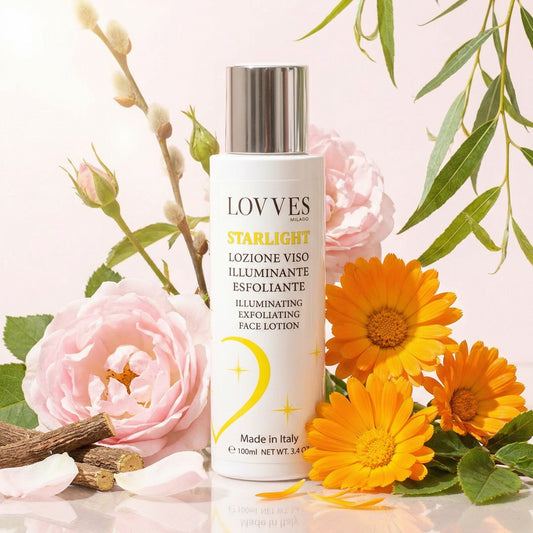
Illuminating Exfoliating Face Lotion
68 recensioniRegular price €31,70Regular price€42,30Sale price €31,70Sale